
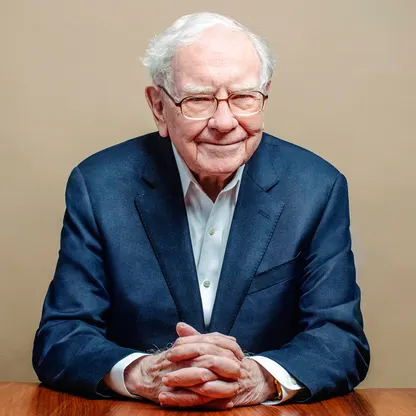
In the frenetic, algorithm-driven world of modern finance, Warren Buffett stands as a monument to a different era. He is not a tech visionary, a speculative crypto trader, or a private equity raider. He is an investor. Pure and simple. With a net worth of approximately $146 billion as of September 2025, the “Oracle of Omaha” remains one of the wealthiest and most respected figures in global business, not for the speed of his gains, but for the staggering consistency and patience with which he has accumulated them over nearly eight decades.
Buffett’s story is the ultimate case study in long-term value investing. His fortune is not tied to a single company he founded but is almost entirely a product of his ownership in Berkshire Hathaway, the sprawling conglomerate he built from a failing textile mill into a $900+ billion empire. This article deconstructs the pillars of his wealth, explores the core tenets of his philosophy, and examines how a man preaching simplicity became one of the most successful capitalists in history.
The Foundation: Berkshire Hathaway – The “Moat”-Protected Conglomerate
Unlike most billionaires whose wealth is marked-to-market based on volatile stock prices of a single company, Buffett’s net worth is a direct reflection of the intrinsic value of Berkshire Hathaway (BRK-A, BRK-B). His personal holdings consist almost entirely of Class A shares of Berkshire, a stake he has held and added to for over 60 years.
Berkshire is not a typical company. It is a massive, diversified holding company with two primary engines of wealth creation:
- A Massive Portfolio of Publicly Traded Stocks: Berkshire’s equity portfolio is worth over $400 billion. It is not a hyper-active fund but a concentrated collection of massive, long-term bets on companies Buffett and his team believe have enduring competitive advantages, or “moats.”
- Apple Inc. (AAPL): The crown jewel. Berkshire’s stake, now worth well over $200 billion, is a legendary bet that defied critics who said Buffett didn’t understand tech. He saw Apple not as a tech company, but as a consumer-products giant with an unparalleled ecosystem and brand loyalty.
- Bank of America (BAC), American Express (AXP), Coca-Cola (KO): These represent classic “Buffett” investments: companies with strong brands, pricing power, and deep roots in the American economy. The Coca-Cola stake alone generates hundreds of millions in annual dividends.
- Chevron (CVX) and Occidental Petroleum (OXY): Bets on energy, reflecting a view on the enduring need for fossil fuels during a long-term transition.
- A Collection of Wholly-Owned Subsidiaries (The “Hard Rocks”): This is the other, often overlooked, half of Berkshire. These are entire companies purchased outright that generate massive, predictable cash flows. This cash is then sent to headquarters in Omaha for Buffett and his partners to redeploy into new investments. Key subsidiaries include:
- GEICO: The second-largest auto insurer in the U.S., a classic Buffett “float” business.
- BNSF Railway: One of the largest freight rail networks in North America, a critical artery for the U.S. economy.
- Berkshire Hathaway Energy: A massive utility operator, another reliable cash generator.
- Manufacturing, Service, and Retail Companies: Dozens of companies like See’s Candies, Dairy Queen, Duracell, and Precision Castparts.
This structure is genius: the publicly-traded stocks provide enormous growth potential, while the private subsidiaries provide a tsunami of cash to fuel further investments, all without taking on dangerous levels of debt.
The Buffett Philosophy: The Religion of Value Investing
Buffett didn’t invent his strategy; he perfected it under the mentorship of Benjamin Graham at Columbia Business School. His core principles are deceptively simple but incredibly difficult to execute emotionally:
- Rule No. 1: Never Lose Money. Rule No. 2: Never Forget Rule No. 1. This isn’t literal; it’s a principle of capital preservation. It means avoiding risky bets where the permanent loss of capital is a real possibility.
- Invest in Businesses You Understand (Circle of Competence): Buffett famously avoided the dot-com boom because he didn’t understand the tech companies. He stuck to his circle, a key to his consistency.
- Look for a Durable Competitive Advantage (The “Moat”): A moat is what protects a castle. A economic moat is what protects a business from its competitors. It can be a brand (Coca-Cola), a cost advantage (GEICO), or a network effect (Apple).
- Margin of Safety: Only buy a security when its price is significantly below your calculated intrinsic value. This discount provides a cushion against error or market downturns.
- Be Fearful When Others Are Greedy and Greedy When Others Are Fearful: Buffett’s most famous market timing advice. His best deals—like during the 2008 Financial Crisis or the COVID-19 market panic—came when he deployed billions while others were selling in a panic.
The Giving Pledge: The “Un-Billionaire” Lifestyle
A critical component of Buffett’s story is his attitude toward wealth. He lives a remarkably modest lifestyle in the same Omaha home he bought in 1958 for $31,500. His famed frugality is a principle, not a necessity.
More significantly, in 2006, he announced he would gradually give away over 99% of his wealth, primarily to the Bill & Melinda Gates Foundation and foundations run by his children. He has already donated over $55 billion. His net worth of $146 billion is what remains after these historic donations. This ongoing philanthropy slightly tempers the growth of his net worth but cements his legacy as a different kind of capitalist.
The Wealth Breakdown: A September 2025 Snapshot
So, how is the ≈$146 billion fortune structured?
- Berkshire Hathaway Stock Holdings: The entirety of his liquid wealth. He owns approximately 15% of Berkshire’s Class A shares. This stake, valued at over $145 billion, is the sole source of his listed net worth.
- Personal Assets & Cash: A minuscule fraction of his wealth is in personal assets. His cash holdings are within Berkshire itself, not in a personal account. His lifestyle is funded by a modest salary of $100,000 per year from Berkshire.
- The “Philanthropic” Liability: His net worth calculation factors in the expectation of further large donations, as per his pledge.
The Future: The Post-Buffett Era
The biggest question surrounding Berkshire Hathaway is its future. At 95 years old, Buffett has meticulously planned for succession. Vice Chairmen Greg Abel (slated to become CEO) and Ajit Jain (overseeing insurance operations) are now the faces of the company’s operational future. The investment portfolio is managed by Ted Weschler and Todd Combs.
The market’s faith in this plan is a testament to the culture Buffett built. The “Berkshire Way” is now institutionalized. While no one can truly replace the Oracle, the company is built to endure as a testament to his principles.
Conclusion: The Ultimate Validation of Patience
Warren Buffett’s $146 billion net worth is not a number on a screen. It is the quantitative proof of a philosophy. It is the result of a lifetime of rational decision-making, emotional discipline, and an unwavering belief in the long-term growth of the American economy and high-quality businesses.
In a world obsessed with the new and now, Buffett is a powerful reminder that the greatest fortunes are often built not by chasing trends, but by patiently compounding value over time. He is the ultimate buy-and-hold investor, and his life’s work is the most successful validation of that strategy the world has ever seen. His true legacy won’t just be his wealth, but the timeless principles he leaves behind for every investor who follows.
Frequently Asked Questions (FAQs)
1. What is Warren Buffett’s net worth in 2025?
As of September 2025, Warren Buffett’s estimated net worth is approximately $146 billion, making him one of the five richest people in the world.
2. How did Warren Buffett make his money?
He built his fortune primarily through his investment holding company, Berkshire Hathaway. His wealth comes from the appreciation of Berkshire’s stock price, which reflects the value of its vast portfolio of public stocks and owned private companies.
3. What is Warren Buffett’s investing style?
He is the world’s most famous proponent of value investing. This involves buying shares of strong companies that are trading for less than their intrinsic value and holding them for the long term.
4. What is Berkshire Hathaway?
Originally a textile company, it is now a massive multinational conglomerate holding company headquartered in Omaha, Nebraska. It wholly owns dozens of companies (like GEICO and BNSF Railway) and holds a massive portfolio of publicly traded stock (like Apple and Coca-Cola).
5. What is Warren Buffett’s famous quote?
He has many, but among the most famous are: “Rule No. 1: Never lose money. Rule No. 2: Never forget rule No. 1,” and “It’s far better to buy a wonderful company at a fair price than a fair company at a wonderful price.”
6. How old is Warren Buffett?
Warren Buffett was born on August 30, 1930, making him 95 years old as of 2025.
7. Where does Warren Buffett live?
He still lives in the same relatively modest house in Omaha, Nebraska, that he purchased in 1958 for $31,500.
8. What is Warren Buffett’s salary?
His base salary as CEO of Berkshire Hathaway is $100,000 per year, which is exceptionally low for the CEO of such a large company.
9. Does Warren Buffett give to charity?
Yes, extraordinarily so. He has pledged to give away over 99% of his wealth. He has already donated more than $55 billion, primarily to the Gates Foundation and foundations run by his children.
10. Who will succeed Warren Buffett?
Greg Abel, the current Vice Chairman of Non-Insurance Operations, is the designated successor to become CEO of Berkshire Hathaway.
11. What is the Buffett Rule?
In politics, the “Buffett Rule” was a tax policy proposal that no household making over $1 million annually should pay a smaller share of their income in taxes than middle-class families pay. This is separate from his investing rules.
12. What books did Warren Buffett recommend?
He frequently recommends The Intelligent Investor by Benjamin Graham, his mentor. He also suggests Security Analysis (also by Graham) and Poor Charlie’s Almanack by his partner, Charlie Munger.
13. What is the single best investment Warren Buffett ever made?
While subjective, his investment in See’s Candies in 1972 is often cited as a perfect example of his philosophy. His investment in Apple, starting in 2016, has also been one of his most lucrative in terms of sheer dollar gains.
14. Does Warren Buffett invest in gold?
He has historically been critical of gold as an investment because it is non-productive (it doesn’t generate earnings or dividends). Berkshire did, however, purchase shares in Barrick Gold Corp. in 2020, which was seen as a significant shift.
15. What is Warren Buffett’s diet?
He is famously known for having a poor diet, enjoying Coca-Cola, McDonald’s, and ice cream. He has joked that his health stats are great because “the body can’t process that much junk.”
16. What was Warren Buffett’s first business?
As a child, he had several businesses, including selling chewing gum and Coca-Cola door-to-door and delivering newspapers. His first incorporated business was Buffett Partnership Ltd., his investment fund.
17. What is the annual Berkshire Hathaway meeting?
Dubbed “Woodstock for Capitalists,” it is an annual event in Omaha where tens of thousands of shareholders gather to hear Buffett and the late Charlie Munger answer questions for hours. It is a major event in the business world.
18. Does Warren Buffett own Bitcoin or cryptocurrency?
No, he has been highly critical of cryptocurrency, famously calling Bitcoin “rat poison squared” and stating that it produces nothing.
19. What car does Warren Buffett drive?
He drives a Cadillac, typically upgrading to a new one every few years. He is not known for owning a fleet of luxury cars.
20. How can I invest like Warren Buffett?
The core principles for individual investors are: invest in low-cost index funds (like the S&P 500) for diversification, focus on the long term, avoid trying to time the market, and live within your means.
21. What is “float” in insurance?
Float is the money insurance companies hold from premiums paid by customers that has not yet been paid out in claims. Buffett uses this float from GEICO and other insurers as free capital to make investments.
22. Did Warren Buffett ever sell a stock?
Yes, despite his buy-and-hold reputation, he does sell stocks. Recent major sales have included portions of his holdings in banks like Wells Fargo and U.S. Bancorp.
23. What is Warren Buffett’s relationship with Bill Gates?
They are close friends and bridge partners. Despite their friendship, Buffett convinced Gates to join the Berkshire board, not the other way around.
24. How many shares of Berkshire Hathaway does Warren Buffett own?
He owns over 230,000 Class A shares, which represents about 15% of the company.
25. What is the difference between BRK.A and BRK.B?
BRK.A is the original Class A share, which has never split and trades for over $600,000 per share (as of 2025). BRK.B is a Class B share, created to be more affordable for smaller investors; one BRK.B share is worth about 1/1500th of an A share.
26. What is Warren Buffett’s biggest holding?
Within the Berkshire portfolio, Apple Inc. (AAPL) is by far the largest holding by market value.
27. What did Warren Buffett study?
He studied business at the University of Pennsylvania’s Wharton School and later received a Master of Science in Economics from Columbia University, where he studied under Benjamin Graham.
28. Is Warren Buffett a self-made billionaire?
Yes, he is considered self-made. While his father was a U.S. Congressman, he provided political connections but not significant capital for investing. Buffett built his fortune from his own investment decisions.
29. What is the “Oracle of Omaha” nickname?
It is a nickname given to him due to his incredible track record of successful investing and the wisdom he dispenses, all from his base in Omaha, Nebraska.
30. Does Warren Buffett own any private jets?
Yes, Berkshire Hathaway owns NetJets, a fractional private jet company. Buffett himself flies on private jets operated by NetJets, which he nicknamed “The Indefensible” due to the high cost, though he admits it’s a necessary tool for his efficiency.
